Why Crawl-Space Rodent Odor Lingers After Removal
Removing the animal solves only one part of a crawl-space problem. Affected insulation, wood, vapor barriers, airflow, and moisture can keep odor moving through the home.
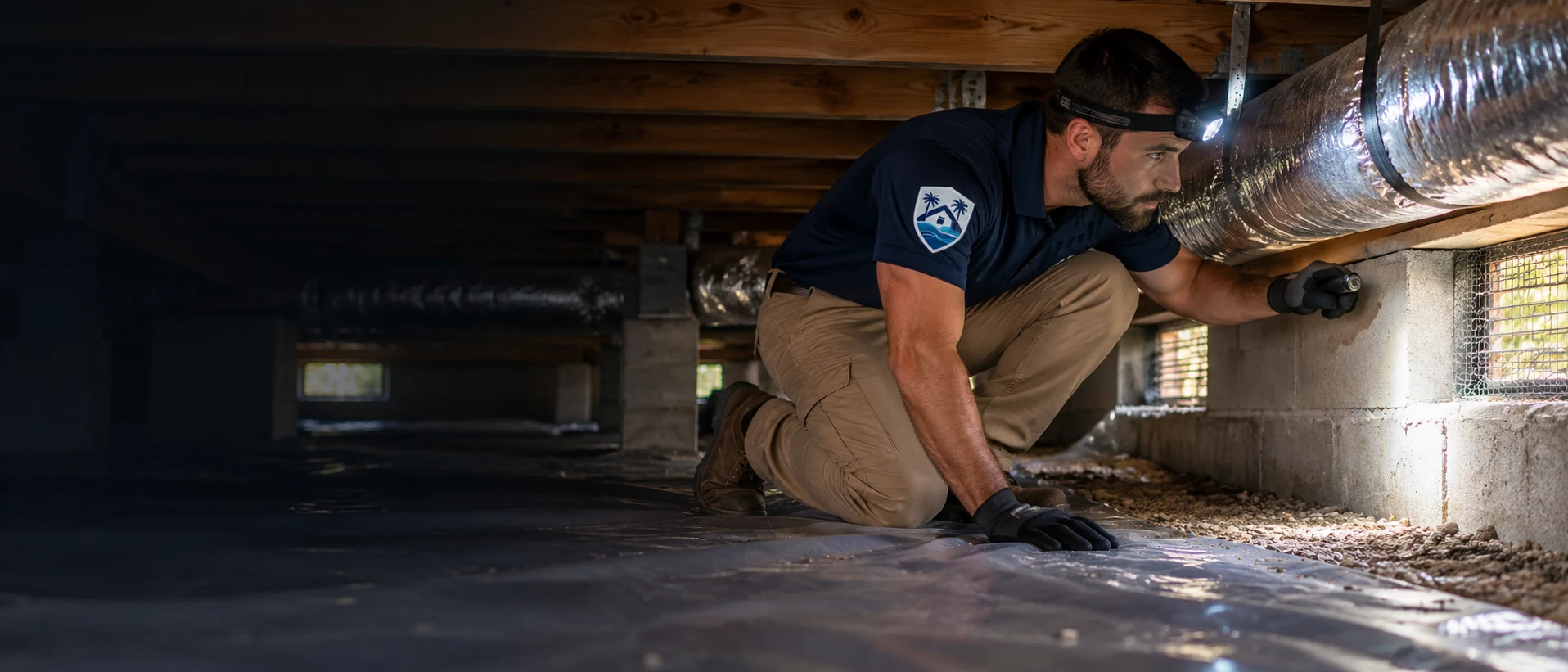
Quick answer: Lingering odor can come from contaminated nesting material, insulation, wood, soil, vapor barriers, or airflow from the crawl space into living areas. Control the active route first, then plan sanitation, drying, material removal, repair, and exclusion in the right order.
Why can crawl-space odor remain after removal?
The animal is only one source of odor. Urine, droppings, nesting fibers, damaged insulation, vapor-barrier residue, wood, and soil can all hold a smell after the animal is gone. Odor can also move through floor penetrations, duct areas, plumbing chases, and gaps around access panels. That is why a quick deodorizer may hide a symptom without solving the affected material.
A crawl space is difficult to read from the living room. The smell may be strongest near one floor register, then change with air-conditioning use, wind, rain, or humidity. Record when it is strongest and which rooms are affected. This helps separate a crawl-space source from plumbing odor, wet building material, mold-related concerns, or another issue that needs a different professional.
- Persistent odor after the animal is gone
- Odor that changes when HVAC runs
- Nesting or droppings near insulation
- Musty smell mixed with a sharp animal odor
How does South Florida humidity affect crawl spaces?
West Palm Beach heat and humidity can slow drying and keep soft materials damp. A wet vapor barrier, soil contact, poor drainage, or limited airflow can make any odor last longer. Humidity can also create unrelated mustiness, so an inspection should record moisture conditions rather than assume every smell comes from rodents.
Moisture changes the cleanup plan. Affected materials may need to be dried, removed, cleaned, sealed, or monitored. The correct step depends on the material, the extent of contamination, and whether the space can be accessed safely. Do not enter a low, damp crawl space without appropriate protection and a clear way back out.
- Check whether odor changes after rain
- Look for standing water or wet soil
- Note wet insulation or vapor-barrier areas
- Separate animal odor from general mustiness
Where can odor hide?
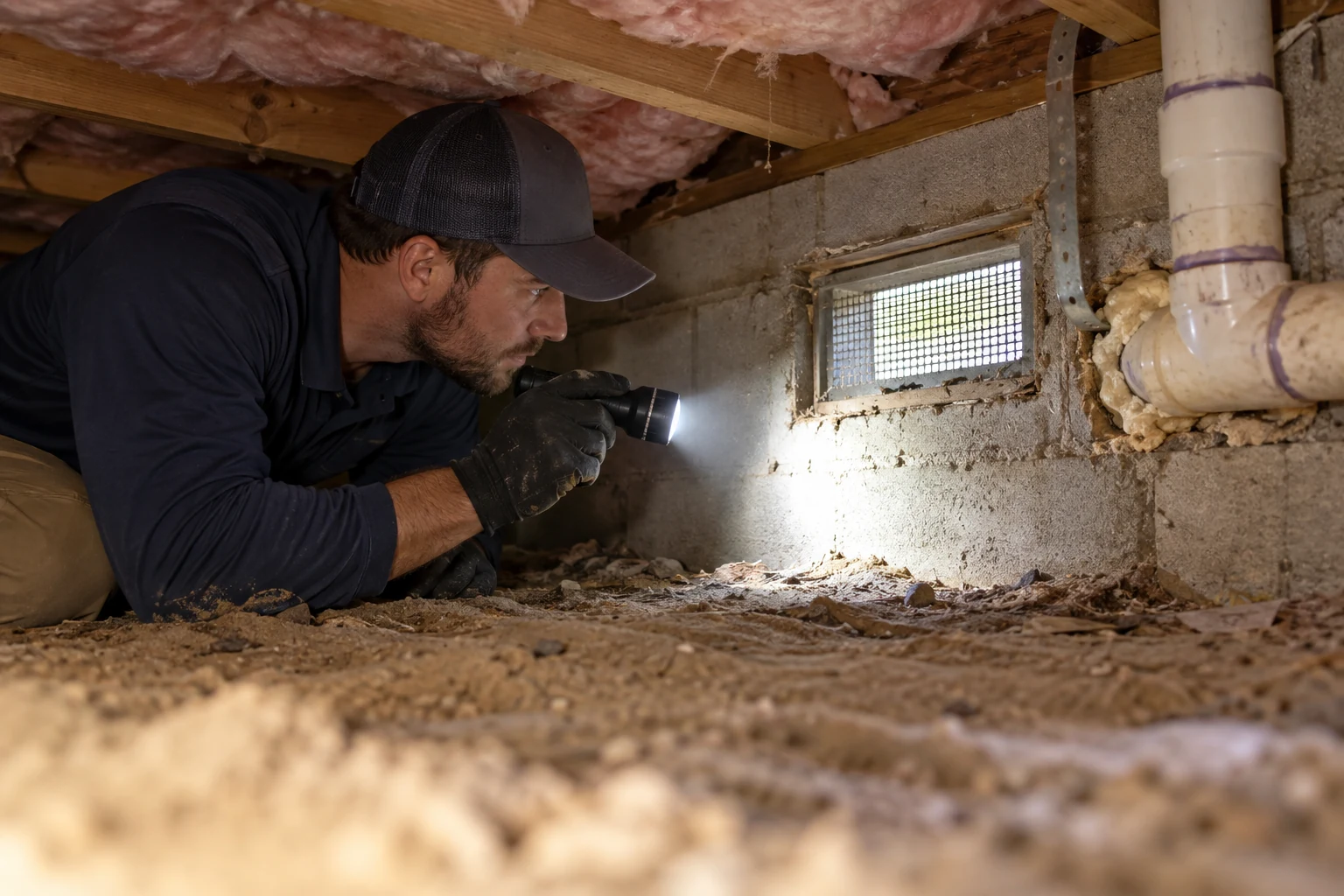
Odor may remain in soft insulation, loose nesting material, wood framing, subfloor edges, vapor-barrier folds, or soil under a nest site. It can also collect around an access door, foundation vent, or utility penetration. A visible clean floor does not prove that nearby hidden material is unaffected.
The location of the smell is not always the location of the source. Air movement can carry odor upward through a crack around a pipe or floor register. A useful inspection follows the air path and looks at the crawl space, floor penetrations, and rooms above it together.
- Insulation and nesting material
- Vapor barriers and seams
- Subfloor edges and wood framing
- Soil or debris under the former nest
What is the correct cleanup sequence?
Start with source control. Confirm that active animals are addressed and that the access route is understood. Then identify affected materials, protect clean areas, remove waste safely, clean appropriate hard surfaces, and address odor or drying. Exclusion should be completed so the cleanup does not become temporary.
Cleanup, repair, and replacement are different decisions. Some materials can be cleaned; others may need removal because they are porous, damaged, or heavily affected. Ask for a written scope that explains what will be removed, what will remain, how the space will be protected, and how completion will be checked.
- Control the active route first
- Create a clean-to-dirty work boundary
- Remove affected waste in sealed containers
- Dry and repair before final prevention
When is crawl-space cleanup more urgent?
Get prompt professional guidance when contamination is widespread, the crawl space affects indoor air, odor is strong in occupied rooms, insulation is damaged, or anyone in the home is especially sensitive to dust or contamination. The right response depends on the property and the material, not just the strength of the smell.
Do not disturb a large amount of dry droppings, nesting material, or contaminated insulation. Do not run fans that blow across the area and into the home. Keep the access closed and explain the situation to the provider so the visit can be planned around safety, ventilation, pets, and occupied rooms.
- Strong odor reaches bedrooms or living areas
- Contamination covers insulation or multiple bays
- The space is wet, confined, or difficult to enter
- There is damaged wiring or another immediate hazard
How does exclusion prevent odor from returning?
If a route remains open, a cleaned crawl space can quickly become active again. Check foundation vents, access doors, plumbing and cable penetrations, garage transitions, and openings around the floor line. The repair must close the practical path without blocking drainage or ventilation that the building needs.
Follow-up matters because materials move and weather changes the building edge. After exclusion, monitor odor, fresh evidence, and moisture. If the smell returns, report the timing and location. It may indicate a missed route, a separate moisture source, or material that still needs attention.
- Review foundation and access edges
- Protect vents with appropriate materials
- Seal utility openings safely
- Schedule a follow-up when odor returns
What should West Palm Beach homeowners ask about repair?
Ask whether the work covers insulation, vapor barriers, wood, access doors, vents, drainage, or only surface cleaning. A rodent-control provider may coordinate with a repair or moisture professional when the condition is outside the original scope. Clear boundaries protect the homeowner from assuming that one service includes every trade.
Ask how the provider will document the finished space. Photos, a list of affected areas, and a note about remaining moisture or odor give you a useful record. This is especially valuable when the crawl space is hard to access or the property changes hands later.
- What material is affected?
- What will be cleaned or replaced?
- Is moisture part of the problem?
- Who handles repair outside the service scope?
A crawl-space prevention routine
Keep access doors closed, store food and pet supplies properly, maintain screens and vents, and keep vegetation from creating a protected route to the foundation. After heavy rain, look for new moisture or displaced materials from a safe position. Do not block vents or alter drainage without understanding the building system.
A short seasonal check can prevent a hidden issue from becoming a strong indoor odor. Record repairs, monitor the rooms above the crawl space, and act when signs repeat. Prevention works best when it combines route closure, moisture awareness, and safe housekeeping.
- Keep food and seed in sealed containers
- Check access doors and foundation vents
- Watch for moisture after rain
- Recheck after repairs or storms
What to include when requesting help
When you contact a West Palm Beach service provider about crawl-space rodent odor, share the address area, the rooms involved, the first date you noticed a sign, and what changed before the problem started. Explain whether the property is a single-family home, condo, townhome, rental, garage, or another setting. Clear details help the provider plan access and ask better questions before the visit.
Include recent weather, roof or screen work, plumbing or HVAC service, pets, children, stored food, and any safety concern. Say what you have already tried and whether the evidence returned. Ask for a written scope that separates inspection, removal or trapping, exclusion, cleanup, repair, monitoring, and follow-up. This makes the next step easier to understand and helps prevent a generic recommendation.
- Room, date, time, and type of evidence
- Recent storms, repairs, or changes in access
- People, pets, food, and occupied areas that need protection
- What the first visit includes and how completion will be checked
Local planning notes for West Palm Beach homeowners
Crawl-space odor is easier to manage when the source, material, and airflow are considered together. A clean surface near the access door does not rule out affected insulation or soil farther inside. Likewise, a musty smell may have a moisture source rather than an animal source. Keep the language simple and specific when describing the problem: where it is strongest, when it changes, and what physical evidence is nearby.
For a West Palm Beach home, ask how humidity, rain, drainage, ventilation, and the vapor barrier affect the plan. These questions do not replace a professional assessment, but they help separate rodent control from moisture repair and make the scope easier to understand. If another trade is needed, the provider should identify that boundary rather than implying that cleaning alone solves every condition.
Follow-up is part of a crawl-space project. Keep photos of the affected areas, the repair locations, and the date of completion. Monitor odor and new evidence without disturbing the space. If the smell returns, the record can show whether the issue is a missed route, remaining material, moisture, or a new event that deserves a different inspection.
Frequently asked questions
Why does rodent odor return after cleaning?
The route may still be active, or odor may remain in porous insulation, wood, vapor barriers, or soil. Source control and material assessment should come before deodorizing.
Can I use an air freshener in the crawl space?
Air freshener may mask the smell without addressing contamination or moisture. Identify the source and use the correct cleanup plan instead.
Is crawl-space rodent cleanup safe to do alone?
Confined spaces, droppings, insulation, wiring, and moisture can create risks. Get professional guidance when contamination is extensive or access is difficult.
Does exclusion stop crawl-space odor?
Exclusion prevents new access, but existing affected material may still need cleaning, drying, removal, or repair.
Connect the evidence to the right service