How to Find Rodent Entry Points Around a West Palm Beach Home
A visible hole is not always the true entry route. Learn how to inspect building transitions safely and why the order of inspection, removal, and exclusion matters.
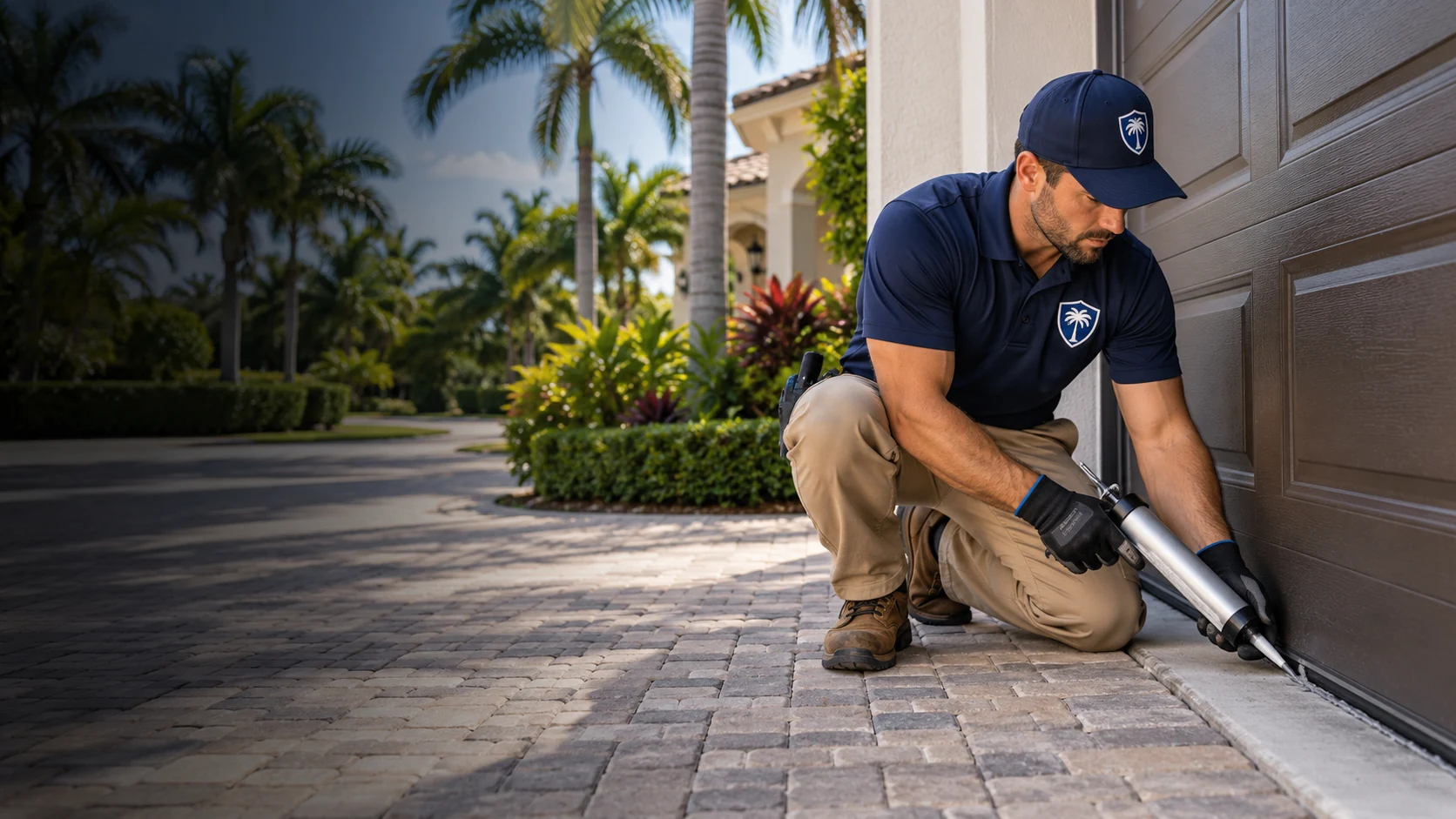
Quick answer: Start where two materials meet: garage doors, screen frames, soffits, roofline vents, foundation vents, doors, and utility penetrations. Photograph gaps from the ground, but do not seal a suspected route until active animals have been addressed.
Why are transition zones important?
Rodents often use transitions because a small failure is protected by a seam, cover, or overhang. A garage door sweep meets a slab. A screen meets a frame. A soffit meets fascia. A cable or pipe passes through a wall. These edges can be easy for an animal to follow and hard for a homeowner to notice from inside the property.
The same opening can affect different buildings in different ways. A condo, townhome, bungalow, and newer planned-community home may have different rooflines, shared walls, crawl-space access, or service chases. A good inspection maps the building edge instead of assuming that every property needs the same sealant or repair.
- Garage and side-door thresholds
- Screened porches and patio frames
- Soffits, fascia, and roofline vents
- Utility, plumbing, and cable penetrations
How do you check a garage and exterior door?
Close the garage door and look for daylight along the bottom and side edges. Check the rubber sweep, corners, weather seal, and the transition between the garage and the home. Store food, seed, and pet supplies in sealed containers. Do not block required drainage or ventilation while trying to close a gap.
Look at side doors, laundry doors, and doors leading to a patio or pool area. A damaged threshold or loose seal can be an easy route even when the main entry door is sound. Note the gap, photograph it, and record whether there are rub marks, droppings, or nesting fibers nearby.
- Check for daylight without touching damaged wiring
- Inspect both sides of a door seal
- Keep trash and food in closed containers
- Do not seal required vents or drainage paths
What should you inspect around screens and porches?
Screen frames can fail at corners, lower edges, pet doors, and areas where a frame meets masonry. Look for tears, loose spline, bent tracks, and gaps behind trim. A small tear can become a route when it sits beside stored items, landscaping, or a sheltered patio. Photograph the full frame so the repair plan includes the transition rather than only the visible hole.
Porches and outdoor rooms deserve attention after storms. Wind can loosen screen panels, shift furniture, and move branches against a roofline. Rain can reveal where water enters, while standing water can change how people use the space. These clues help distinguish a new storm-related opening from a long-standing building condition.
- Screen corners and bottom rails
- Pet doors and flap seals
- Porch-to-wall transitions
- Areas behind stored furniture or planters
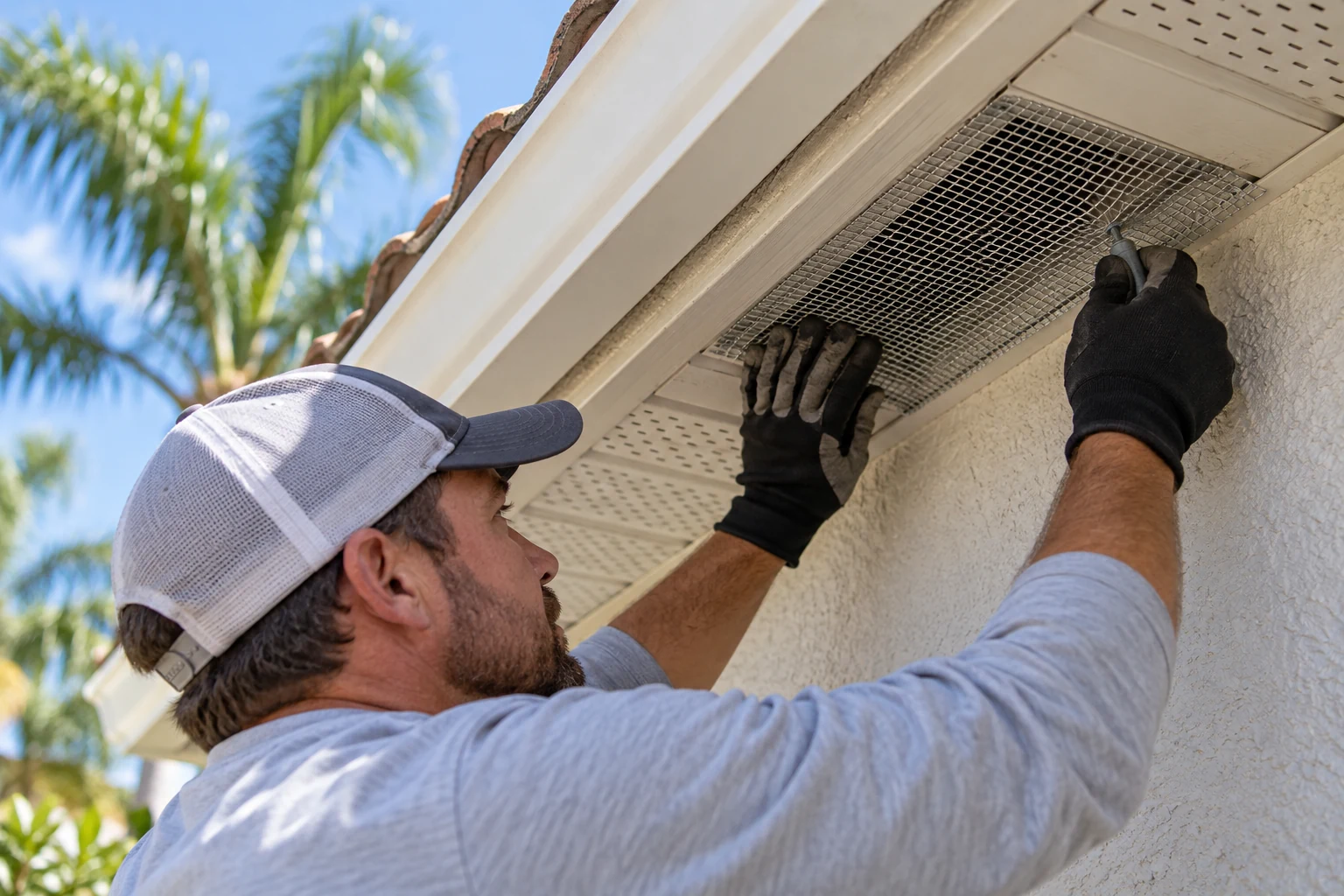
How do you inspect soffits, vents, and rooflines safely?
From the ground, check for missing screens, loose soffit panels, lifted trim, gaps at roof returns, and openings around vents. Use binoculars or a camera zoom instead of climbing onto the roof. Do not reach into a vent, remove a panel, or disturb a nest. Roof work should be handled by the appropriate qualified professional when it is beyond a safe ground inspection.
The entry point may be higher than the first sign inside the house. An animal can travel from the roof edge to an attic, down a wall void, and into a garage or ceiling area. That is why inspection should connect interior evidence with the exterior path before exclusion work begins.
- Use a safe standing position
- Check vents, returns, fascia, and soffit edges
- Avoid roof access without proper equipment
- Compare exterior gaps with interior signs
Why do small utility openings matter?
Pipes, cables, conduit, hose connections, and equipment lines often pass through walls or slabs. The opening may be hidden by a cover, shrub, stored item, or equipment. Look for daylight, loose material, rub marks, droppings, or a gap larger than the installed line. Do not touch electrical components or remove covers just to inspect behind them.
Utility openings also create complicated repair questions. The seal must tolerate movement, heat, water, and access for future service. A quick patch can fail or block a needed line. Ask the provider to explain whether the condition needs exclusion material, carpentry, screen repair, plumbing work, or an electrician.
- Around AC lines and condensate lines
- Around cable and conduit entries
- At hose bibs and plumbing penetrations
- Behind equipment only when safe and accessible
When should you call for professional exclusion?
Call when you find repeated signs, an opening connected to an active route, damage near wiring, or a gap that is difficult to access. Exclusion is most effective after the provider understands whether an animal is present and how it is using the building. Sealing first can trap an animal or redirect it into a wall, attic, or crawl space.
A professional exclusion plan should list the locations, materials, and follow-up checks. It may include screen repair, vent protection, door seals, soffit work, trim repair, or coordination with another trade. The plan should be practical for the property and should not block ventilation, drainage, or required access.
- The route is active or repeated
- A gap is high, hidden, or unsafe to reach
- The opening involves wiring or roof work
- A previous repair did not hold
How West Palm Beach weather affects entry points
Heavy rain and wind can expose gaps that were not obvious in dry weather. Branches can touch rooflines, screens can loosen, and temporary construction openings can remain after a repair. Humidity can also soften or age some materials, while salt air and outdoor exposure can affect metal screens and fasteners near coastal areas.
Check the building edge after major weather, but wait until conditions are safe. Record what changed and when. A clear before-and-after note helps separate a storm-created opening from a route that existed before the weather event.
- Recheck after wind and rain
- Keep branches off roofs and walls
- Inspect screens after moving outdoor furniture
- Track repairs that involve the building edge
What should you do after an entry point is closed?
Watch the area without disturbing it. Look for fresh droppings, new gnawing, movement, or odor in the days after work. If signs continue, report the exact location and timing rather than adding more sealant. Continued evidence can mean an animal remains inside, another route was missed, or a different source is involved.
Keep a small maintenance list for doors, screens, vents, roofline edges, and utility penetrations. Prevention is not about sealing every opening in a home. It is about closing practical routes while preserving normal drainage, ventilation, and service access.
- Photograph the completed repair
- Keep the repair location in your maintenance notes
- Monitor for fresh signs
- Schedule follow-up when activity continues
What to include when requesting help
When you contact a West Palm Beach service provider about rodent entry points, share the address area, the rooms involved, the first date you noticed a sign, and what changed before the problem started. Explain whether the property is a single-family home, condo, townhome, rental, garage, or another setting. Clear details help the provider plan access and ask better questions before the visit.
Include recent weather, roof or screen work, plumbing or HVAC service, pets, children, stored food, and any safety concern. Say what you have already tried and whether the evidence returned. Ask for a written scope that separates inspection, removal or trapping, exclusion, cleanup, repair, monitoring, and follow-up. This makes the next step easier to understand and helps prevent a generic recommendation.
- Room, date, time, and type of evidence
- Recent storms, repairs, or changes in access
- People, pets, food, and occupied areas that need protection
- What the first visit includes and how completion will be checked
Local planning notes for West Palm Beach homeowners
Entry-point work rewards patience. Walk the property in a consistent direction and document each transition before moving to the next. This helps you see how a garage, porch, roofline, foundation, and utility wall connect. It also prevents a common mistake: repairing the first visible hole while missing a protected opening a few feet away.
Use photographs and measurements for communication, but do not turn a safe ground inspection into roof work or electrical work. If the route involves a high soffit, damaged roof material, wiring, plumbing, unstable trim, or a confined space, the right next step may involve a qualified trade as well as a rodent-control provider. A durable repair respects the building system.
After exclusion, keep the repair visible in your maintenance notes. Check it after major rain, landscaping, screen work, and construction. If fresh signs return, report the exact edge and timing instead of adding random sealant. That history makes the next inspection more precise and helps protect the home from repeat access.
Frequently asked questions
What size gap can rodents use?
Small openings can matter, especially when they connect to a sheltered wall, attic, or crawl space. The full route and evidence matter more than relying on one measurement.
Should I seal a hole as soon as I find it?
Not if an animal may still be inside. Confirm the route and address active animals before final exclusion so the repair does not trap or redirect them.
Can I inspect the roof myself?
Use a ground-level view, binoculars, or a camera zoom. Roof access, wiring, nests, and unstable surfaces should be handled by the right qualified professional.
What is the difference between exclusion and repair?
Exclusion closes an animal route. Repair restores damaged screens, soffits, trim, insulation, or other building materials. One project may need both.
Connect the evidence to the right service