Rodent Noise in the Attic: West Palm Beach Guide
Nighttime scratching is useful evidence, but sound alone cannot show where an animal is entering. Learn how to record the pattern and protect the home while the route is investigated.
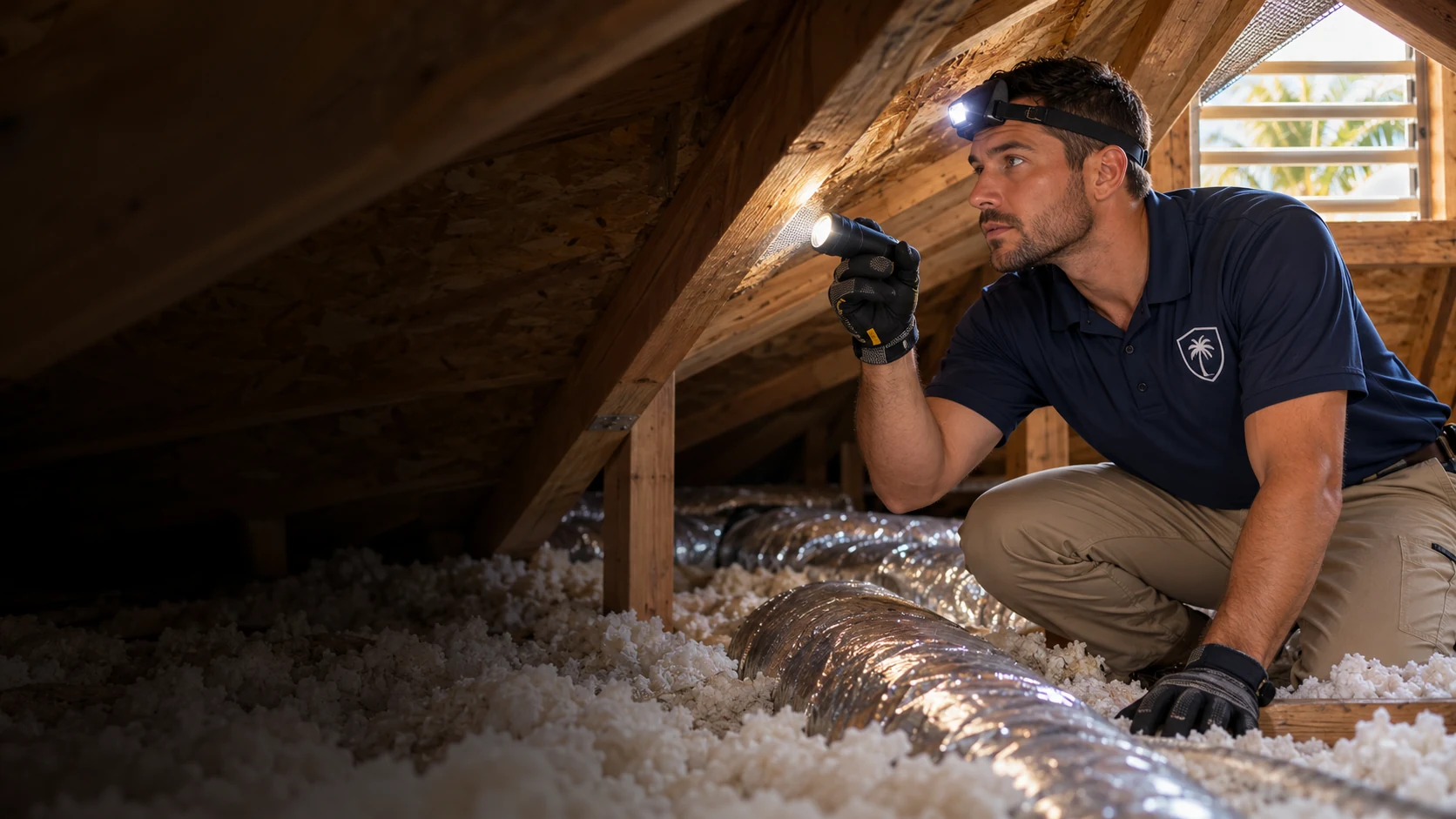
Quick answer: Start by recording when the sound begins, where it is strongest, and whether it moves. Keep people and pets away from the attic opening, do not disturb droppings or wiring, and use an attic inspection to separate rodents from birds, HVAC noise, roof movement, and other causes.
What can scratching in the attic mean?
Scratching, light running, gnawing, or rustling can mean an animal is moving through insulation, along a roof edge, or near a vent. The sound may be inside the attic or travel through framing into a bedroom ceiling. A single night does not identify the animal, but a repeating pattern in the same area is useful evidence for a route-based inspection.
West Palm Beach homes also make normal sounds at night. Air-conditioning equipment cycles, roof materials expand and contract, palm leaves touch a roof, and birds can move near vents. The useful question is not only, “Did I hear a noise?” It is, “What pattern, location, and physical evidence support the noise?”
- Time the sound after sunset and before sunrise
- Note the room directly below it
- Record whether it is light scratching, running, gnawing, or fluttering
- Look for nearby droppings, odor, nesting, or damage without disturbing anything
How do you document attic noise?
Keep a short log for several nights if the situation is safe. Write down the date, time, weather, room, duration, and whether the noise moved. A phone recording can help show rhythm and volume, but it should not lead you into an unsafe attic. The record becomes more useful when paired with a photo of the access area or visible roofline evidence from the ground.
Mention recent changes to the property. Roof work, screen repairs, storms, tree trimming, HVAC service, stored boxes, and construction can change access or create new sounds. Tell the inspector whether the noise is above a bedroom, kitchen, garage, or addition, because the room below can point to different building transitions.
- Keep the log in one place
- Use plain descriptions rather than guessing rat or mouse
- Note rain, wind, and HVAC operation
- Share the log before the inspection
What should you avoid doing in the attic?
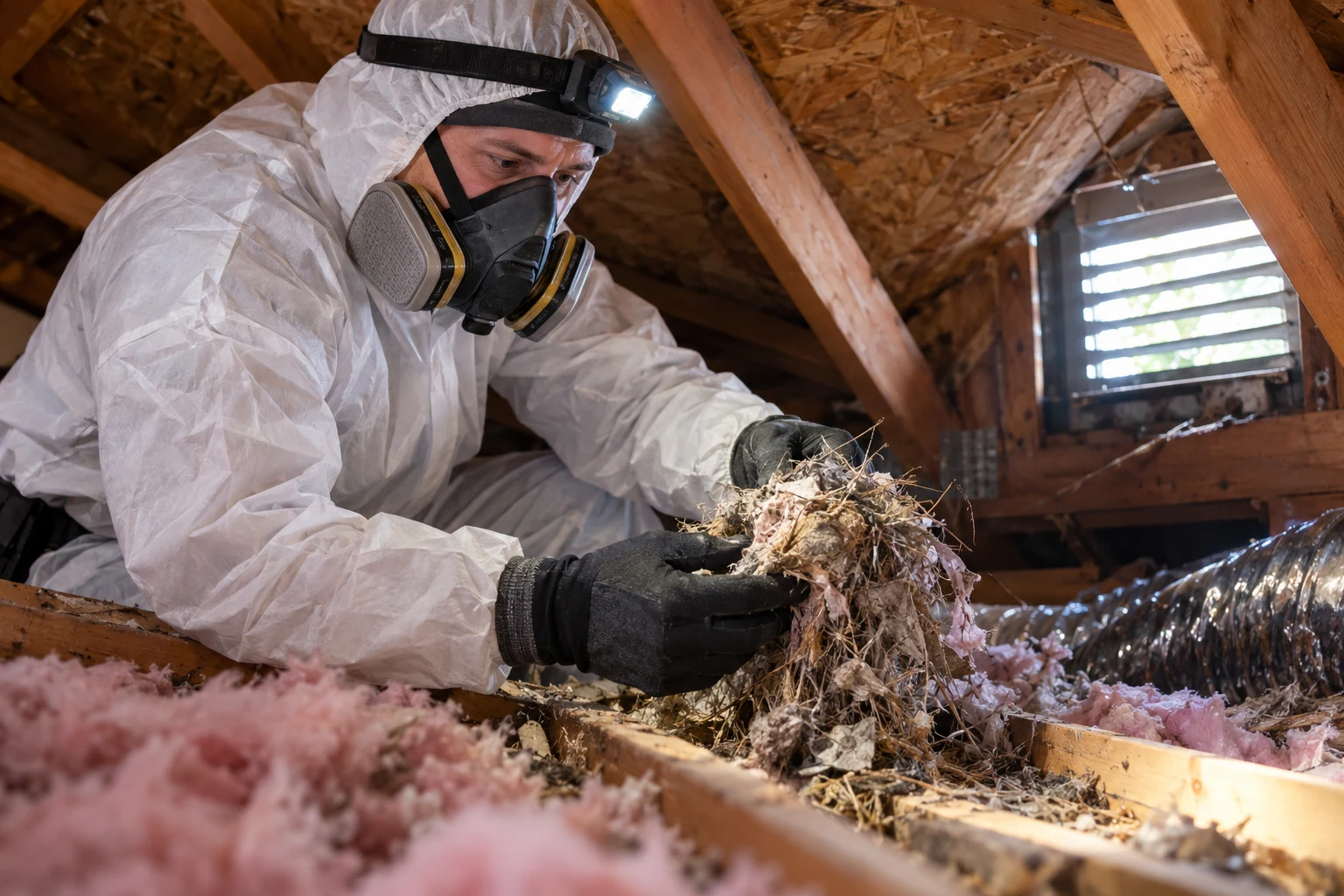
Do not enter loose insulation, step between ceiling joists, or move stored items without safe access and a clear route back out. Attics can contain heat, poor footing, exposed nails, wiring, dust, and contaminated material. A quick search can create a fall risk or spread particles through the home.
Do not disturb a nest, touch damaged wiring, or place chemicals where children and pets can reach them. Do not seal every roofline opening while you are still hearing movement. If an animal is inside, a rushed closure can trap it in a wall or attic and make the next step more difficult.
- Keep children and pets away from the attic hatch
- Do not touch exposed wiring or animal waste
- Do not use dry sweeping or a standard vacuum
- Use emergency help for an immediate electrical or safety hazard
How can an inspector tell what is making the sound?
A focused attic inspection compares the sound location with evidence. The inspector may look at disturbed insulation, droppings, nesting, rub marks, gnawing, roofline vents, soffits, fascia, and penetrations. The goal is to explain the route, not simply label the animal from a sound recording.
The inspection should also consider alternatives. Birds may use roof vents, HVAC components can vibrate, and tree branches can contact the roof during wind. If evidence is absent, the correct answer may be continued monitoring rather than immediate trapping. If evidence is clear, the provider can explain whether removal, exclusion, cleanup, repair, or a combination is appropriate.
- Compare sound with physical evidence
- Check the roofline and attic access
- Consider birds, HVAC, wind, and roof movement
- Separate confirmed findings from assumptions
When is attic rodent removal needed?
Attic rodent removal fits when inspection confirms active animals, nesting, repeated travel, or an occupied route. The method should account for access, children and pets, stored items, and whether more than one route is present. Ask where equipment will be placed, how access will be protected, and how the provider will confirm that activity has ended.
Removal alone does not protect the home from a repeat visit. After the animal is out, the building edge should be reviewed for the entry condition. That can include vents, soffits, roof returns, garage transitions, screens, and utility penetrations. Cleanup may be needed if droppings or nesting material have affected insulation or airflow.
- Confirm activity before choosing a method
- Ask what happens after removal
- Plan exclusion around the actual route
- Discuss sanitation and repair separately
How West Palm Beach weather can affect attic activity
Heat and heavy rain can make a dry, sheltered attic attractive. Wind can move a screen or expose a small roofline gap. Vegetation can create a bridge to the roof edge, and storms can leave temporary openings around trim or vents. These conditions do not automatically cause a rodent problem, but they are useful context when a noise begins after weather changes.
Use weather as a clue, not a diagnosis. Note whether the sound appears after rain, wind, or a repair. Then check the building edge from the ground for displaced screens, loose trim, or new openings. A service provider can use that information to decide whether the next step is inspection, removal, exclusion, or repair.
- Record the first night after a storm
- Check the roofline from a safe position
- Keep branches away from roof surfaces
- Recheck repairs after wind and rain
What should you ask a rodent-control provider?
Ask for a clear sequence: what will be inspected, what evidence supports the recommendation, how an animal will be removed, and how access will be closed. Ask whether the price includes follow-up, cleanup, repairs, or only the first visit. A good conversation makes uncertainty visible instead of promising a result before the building is inspected.
For an occupied West Palm Beach home, also discuss timing, attic access, pets, children, stored belongings, and how the crew will protect finished areas. You should know what you need to prepare and what the provider needs from you. Clear communication is part of a safe attic plan.
- What did you find and where?
- What is included in the estimate?
- How will you confirm the route is closed?
- What follow-up is recommended?
A practical attic prevention checklist
Once the route is closed, prevention becomes a maintenance task. Check roofline screens, soffit returns, vents, garage connections, and utility penetrations after major weather and whenever roof or HVAC work is completed. Keep food and nesting material away from accessible storage areas and avoid stacking boxes directly against exterior walls.
Do not treat prevention as a one-time promise. Homes move, screens age, branches grow, and repairs create new transitions. A short recurring inspection makes it easier to notice a fresh gap before a small route becomes a hidden attic problem.
- Recheck roofline transitions
- Keep stored items organized and accessible
- Trim roof-contacting branches
- Call when nighttime activity returns
What to include when requesting help
When you contact a West Palm Beach service provider about rodent noise in attic, share the address area, the rooms involved, the first date you noticed a sign, and what changed before the problem started. Explain whether the property is a single-family home, condo, townhome, rental, garage, or another setting. Clear details help the provider plan access and ask better questions before the visit.
Include recent weather, roof or screen work, plumbing or HVAC service, pets, children, stored food, and any safety concern. Say what you have already tried and whether the evidence returned. Ask for a written scope that separates inspection, removal or trapping, exclusion, cleanup, repair, monitoring, and follow-up. This makes the next step easier to understand and helps prevent a generic recommendation.
- Room, date, time, and type of evidence
- Recent storms, repairs, or changes in access
- People, pets, food, and occupied areas that need protection
- What the first visit includes and how completion will be checked
Local planning notes for West Palm Beach homeowners
Nighttime noise can make a home feel unsettled, especially when it is above a bedroom or nursery. Start with a calm record instead of repeatedly opening the attic hatch. A few nights of timing, location, weather, and sound description can help an inspector compare the pattern with roofline evidence, disturbed insulation, droppings, or a completely different source such as HVAC vibration.
Tell the provider how the space is used. An attic above bedrooms, a garage, and a finished addition may have different access and safety needs. Mention children, pets, stored belongings, recent roofing, HVAC work, storms, and any odor or damage. Those details help the first visit focus on a safe route and a clear scope rather than a generic trap placement.
A good attic plan explains what happens after the sound stops. Ask how the route will be checked, whether exclusion is included, how contamination will be handled, and what signs should trigger follow-up. The goal is a quiet, protected home with a documented reason for the work—not just an empty trap or a sealed opening that was never understood.
Frequently asked questions
Are all attic noises caused by rodents?
No. Birds, HVAC vibration, roof movement, branches, and other wildlife can sound similar. Physical evidence and a safe inspection help identify the cause.
Should I go into the attic to look?
Avoid entering loose insulation or an unsafe space. Photograph visible areas from a safe position and arrange an inspection when access, footing, wiring, or contamination is a concern.
Can I seal the attic opening immediately?
Do not seal suspected entry points until you know whether an animal is inside. A route-based plan prevents trapping an animal in a wall or attic.
Does attic rodent removal include cleanup?
Not always. Removal, exclusion, sanitation, and repair may be separate parts of the scope. Ask the provider to list each part in writing.
Connect the evidence to the right service